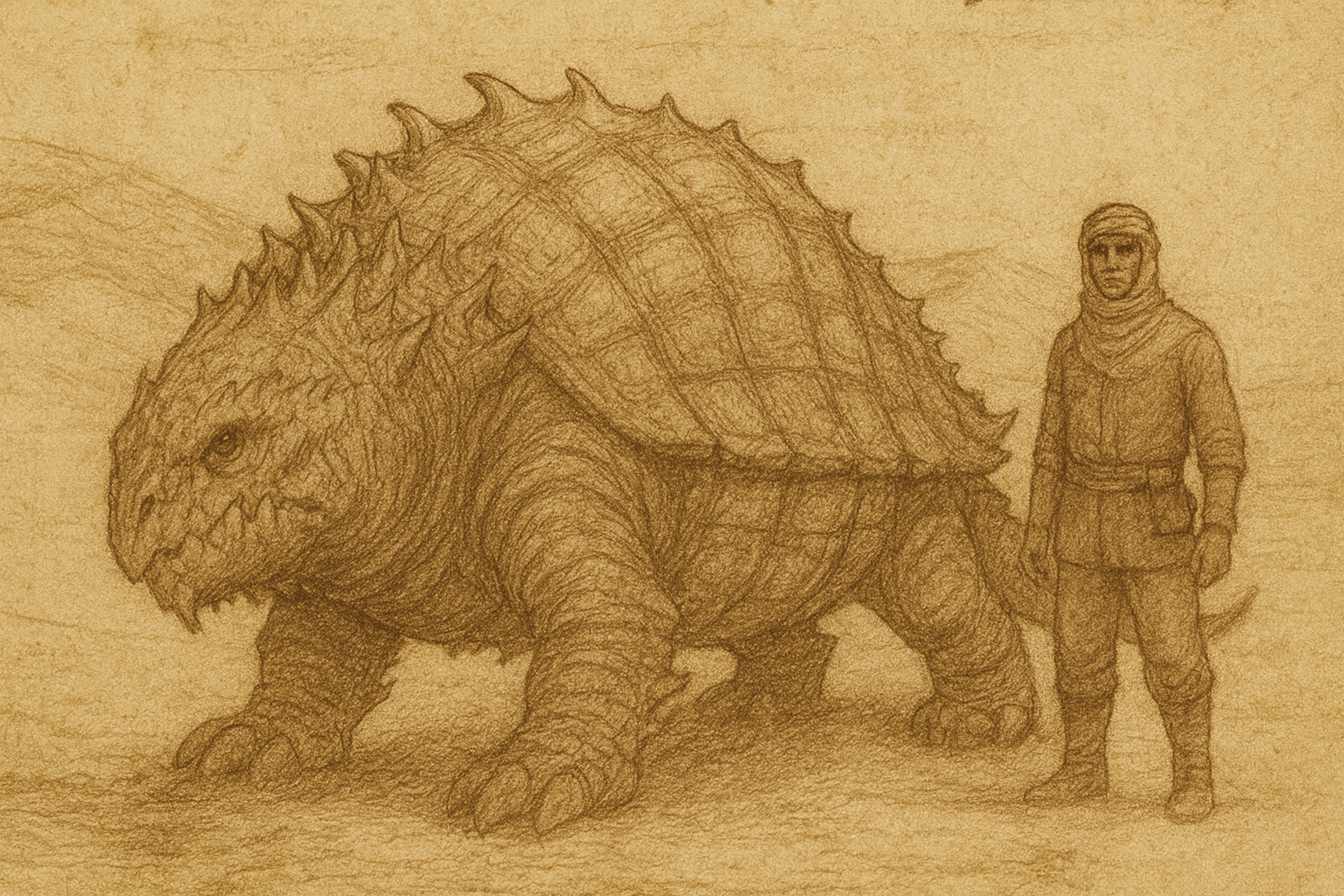
Excerpt from Domesticated Beasts – a field guide circulated among the Merchant Houses.
The thornback is a massive quadruped with a thick shell covered in rows of plate-like scutes. Spines and bony ridges protect its shoulders and flanks. The thornback’s hide is usually sand-colored and heavily wrinkled, but some of the species trend slightly darker or lighter. Their large heads have a beak-shaped mouth and thick-lidded black eyes that appear half-asleep even when alert. The deep rumble of their breathing is often mistaken for distant thunder.
Wild specimens are found in the deep desert traveling in slow-moving herds across ancient desert routes, following migratory patterns that ignore geography, political borders, or weather. They graze on mineral-rich lichen and sun-bleached scrub, occasionally burrowing into the sand to rest. They are social creatures, and if one is separated from the herd, it enters a heightened stress rate and may become aggressive toward nearby creatures.
For the desert caravans, thornbacks are the most effective draft animals. Their wide feet do not sink into the sand like horses or oxen, and they are far stronger than their size would indicate. They are very large creatures, reaching nearly twice as tall as a large man, and are longer than some of the traditional carts used within the Heartlands. Because of their size and strength, they can haul multi-ton wagons tirelessly for days without pause.
Sandborn sometimes decorate their thornbacks, sometimes called akalreth in their native tongue, dying their shells with trade glyphs or prayer symbols. Houses operating in the Ryukhan desert would do well to ensure that they hire an experienced handler to ride along with the caravans as the thornback can sometimes be stubborn and refuse to respond to those who haven’t learned how to interact with them.